The Ultimate Guide to Marketing Funnels & Conversion Optimization

Published on :
July 20, 2026

Table of Content

Have you ever wondered why hundreds of people visit a website, but only a few actually buy something? It happens every day. A business spends money on ads, social media, or SEO to bring visitors to its website. People click, browse a few pages, and then leave without making a purchase or filling out a contact form.

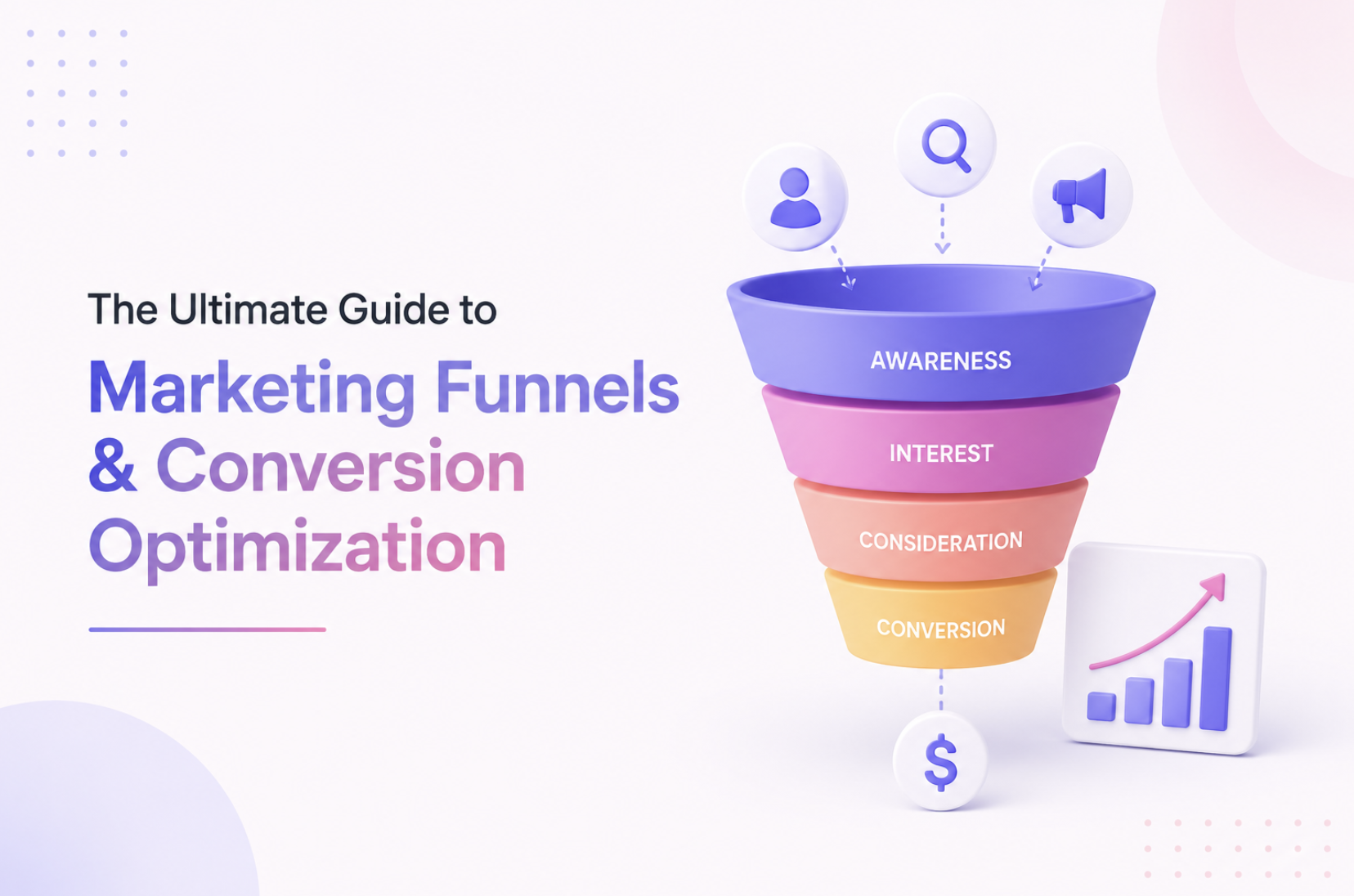
So, where did they go? The answer often lies in the marketing funnel. A marketing funnel helps businesses understand the journey people take before becoming customers. It shows how someone moves from discovering your brand to finally making a purchase. When you understand this journey, you can improve every step and turn more visitors into paying customers.

This is where conversion optimization comes in. In this guide, we'll explain what a marketing funnel is, how it works, why it matters, and the simple ways you can improve conversions at every stage.

What Is a Marketing Funnel?

Imagine walking into a clothing store.

You don't usually buy the first thing you see. First, you look around. Then you compare different options. You might ask questions. Maybe you try something on. Only after you're satisfied do you decide to buy. Online customers behave in exactly the same way. This journey from discovering a brand to becoming a customer is called a marketing funnel.

It's called a funnel because many people enter at the top, but only some reach the bottom and make a purchase. Understanding this journey helps businesses create better experiences for their customers instead of trying to sell too quickly.

Why Is a Marketing Funnel Important?

Many businesses believe getting more website visitors is the solution to increasing sales. But that's not always true. Imagine your website receives 10,000 visitors every month.

If only 50 people become customers, the problem may not be traffic. The problem could be what happens after people arrive.

A well-designed marketing funnel helps businesses:

  • Understand customer behaviour
  • Build trust before selling
  • Improve lead generation
  • Increase conversions
  • Reduce customer drop-offs
  • Create a better customer experience

Instead of guessing why people leave, businesses can identify weak points in the journey and improve them.

What Is Conversion Optimization?

Now that you understand the marketing funnel, let's talk about the next important concept.

Conversion optimization, often called CRO, is the process of improving your website or landing page so that more visitors take the action you want.

That action could be:

  • Making a purchase
  • Filling out a contact form
  • Booking a consultation
  • Downloading a guide
  • Signing up for a newsletter
  • Requesting a quote

Instead of increasing traffic, CRO focuses on increasing results from existing traffic.

Let's look at a simple example. Imagine two websites each receive 1,000 visitors every month. Website A gets 20 enquiries. Website B gets 50 enquiries. Both have the same traffic.

The difference is that Website B has better conversion optimization. It makes it easier for visitors to take action. That's why CRO has become such an important part of digital marketing.

Why Conversion Optimization Matters

Many businesses spend thousands on advertising.

But if their website doesn't convert visitors, much of that budget goes to waste.

Improving your conversion rate can help you:

  • Generate more leads
  • Increase sales
  • Improve return on investment
  • Lower customer acquisition costs
  • Get better results without increasing ad spend

Even a small improvement in conversion rate can have a significant impact on business growth over time. Research consistently shows that optimising existing traffic is often more cost-effective than simply increasing traffic.

The Role of Landing Pages in Conversion Optimization

One of the biggest mistakes businesses make is sending every visitor to their homepage. Your homepage contains lots of information.

But it may not answer the exact question your visitor has. That's where landing pages make a difference. A landing page is built for one specific goal.

For example:

If someone clicks an advertisement about website design, they should arrive on a page focused only on website design services. Not your homepage. A good landing page usually includes:

  • A clear headline
  • A simple explanation
  • Benefits instead of features
  • Customer testimonials
  • A strong call-to-action
  • An easy contact form

The fewer distractions people have, the easier it becomes for them to take action.

Landing pages are one of the most effective tools for improving conversion rates because they're designed around a single objective instead of multiple choices.

How to Improve Conversion Rates

Many businesses believe the only way to increase sales is by spending more on advertising. But that's not always true. Sometimes, the biggest opportunity is improving what already exists.

If more people who visit your website become customers, your business grows without increasing your marketing budget. Here are some practical ways to improve your conversion rates.

Make Your Website Easy to Navigate

People don't like confusion.

If visitors can't quickly find what they're looking for, they'll leave.

Your website should have:

  • Simple navigation
  • Clear headings
  • Fast-loading pages
  • Mobile-friendly design
  • Easy-to-find contact information

The easier your website is to use, the more likely visitors are to stay.

Write Clear Calls to Action

Every page should tell visitors what to do next. Instead of using generic buttons like:

Submit

Try something more specific.

Examples include:

  • Get a Free Quote
  • Book Your Consultation
  • Download the Guide
  • Start Your Free Trial
  • Contact Our Team

A clear call to action removes confusion and encourages visitors to take the next step.

Build Trust

People rarely buy from businesses they don't trust.

That's why trust-building elements are so important.

These include:

  • Customer reviews
  • Testimonials
  • Case studies
  • Certifications
  • Awards
  • Security badges
  • Client logos

Keep Forms Short

Long forms often discourage people from filling them out.

If someone only wants a quote, don't ask for unnecessary details.

Ask only for the information you actually need.

For example:

  • Name
  • Email
  • Phone number
  • Message

A shorter form usually leads to more enquiries.

Improve Website Speed

Nobody enjoys waiting for a slow website.

Even a few extra seconds can cause visitors to leave before your page finishes loading.

Simple improvements like compressing images, reducing unnecessary scripts, and choosing reliable hosting can make a noticeable difference.

A faster website creates a better experience and often leads to higher conversion rates.
Why Conversion Tracking Is Essential

Imagine running an advertisement without knowing whether it generated any customers.

You wouldn't know if your money was well spent.

That's why conversion tracking is so important.

It helps businesses measure which marketing efforts are producing real results.

You can track actions such as:

  • Purchases
  • Contact form submissions
  • Phone calls
  • Newsletter sign-ups
  • App downloads
  • Quote requests

This information allows businesses to understand what's working and where improvements are needed.

Instead of making decisions based on assumptions, you can rely on real data.

How the Customer Journey Affects Conversions

Every customer follows a different path before making a purchase. Some people buy on their first visit. Others may spend weeks researching before making a decision.

This path is known as the customer journey. Understanding this journey helps businesses deliver the right message at the right time.

For example:

  • A first-time visitor may need an educational blog.
  • A returning visitor might be looking for customer reviews.
  • Someone ready to buy may only need a clear pricing page.
  • When your content matches the customer's stage in the journey, conversions naturally improve.
  • That's why successful businesses don't show the same message to everyone.
  • They create different experiences for different audiences.

Common Marketing Funnel Mistakes

Every customer follows a different path before making a purchase. Some people buy on their first visit. Others may spend weeks researching before making a decision.

This path is known as the customer journey. Understanding this journey helps businesses deliver the right message at the right time.

For example:

  • A first-time visitor may need an educational blog.
  • A returning visitor might be looking for customer reviews.
  • Someone ready to buy may only need a clear pricing page.
  • When your content matches the customer's stage in the journey, conversions naturally improve.
  • That's why successful businesses don't show the same message to everyone.
  • They create different experiences for different audiences.

Common Marketing Funnel Mistakes

Even businesses with great products can lose customers because of simple mistakes.

Here are a few common ones.

Trying to Sell Too Early

If someone has just discovered your business, they're probably not ready to buy.

Focus on educating first.

Sales often follow naturally once trust is built.

Ignoring Mobile Users

Most people browse websites on their phones.

If your website isn't mobile-friendly, visitors may leave before exploring your content.

Always test your website on different devices.

Forgetting Existing Customers

Many businesses spend all their effort attracting new customers.

But existing customers are often more likely to buy again.

Email updates, loyalty programmes, and personalised recommendations help keep customers engaged long after their first purchase.

Never Testing Anything

Marketing is never "finished."

Small changes can make a big difference.

For example:

  • A different headline
  • A new button colour
  • A shorter form
  • A stronger call to action
  • Better product images

Testing helps you discover what works best for your audience.

Best CRO Techniques Every Business Should Try

If you're looking for practical CRO techniques, start with these.

  • Improve page loading speed.
  • Use simple and persuasive headlines.
  • Add customer reviews and testimonials.
  • Create dedicated landing pages for campaigns.
  • Make forms shorter and easier to complete.
  • Write stronger calls to action.
  • Test different page layouts.
  • Optimise your website for mobile users.
  • Use conversion tracking to measure results.
  • Continue improving based on real user behaviour.

Remember, conversion optimization is an ongoing process.

Even small improvements can lead to significant growth over time.

Conclusion

A successful marketing strategy doesn't end when someone visits your website. That's only the beginning.

A well-designed marketing funnel helps guide potential customers from awareness to action, while conversion optimization ensures that every stage of the journey works as smoothly as possible. By understanding your audience, creating focused landing pages, tracking conversions, and continuously testing improvements, you can turn more visitors into loyal customers without constantly increasing your advertising budget.

The goal isn't simply to attract more traffic. It's to create better experiences that encourage people to trust your brand and take action.

At Crescent, we help businesses build high-performing marketing funnels and conversion optimization strategies that generate quality leads, improve customer experiences, and deliver measurable business growth.

Frequently Asked Questions

What is a marketing funnel?

A marketing funnel is a framework that shows the journey a customer takes from discovering a business to making a purchase. It typically includes stages such as awareness, interest, decision, and action, helping businesses understand how to guide potential customers towards conversion. (hubspot.com)

How does conversion optimization work?

Conversion optimization (CRO) works by improving websites, landing pages, and user experiences so that more visitors complete desired actions such as making a purchase, submitting a form, or signing up for a service. It involves analysing user behaviour, testing changes, and using data to improve results.

What are the stages of a sales funnel?

A typical sales funnel consists of four stages:

  • Awareness
  • Interest
  • Decision
  • Action

Each stage represents a different step in the customer's buying journey, from discovering your business to becoming a paying customer.

How can you improve conversion rates?

Businesses can improve conversion rates by creating faster websites, writing stronger calls to action, simplifying forms, using customer testimonials, building dedicated landing pages, optimising for mobile devices, and regularly testing different page elements to see what performs best.

Why are landing pages important for CRO?

Landing pages are designed with one specific goal, such as generating leads or encouraging purchases. By removing distractions and focusing on a single call to action, they help improve user experience and increase conversion rates compared to sending visitors to a general homepage.

Share the blog

paper-effect

Check other blogs

pre-arrow
next-arrow
paper-effect