
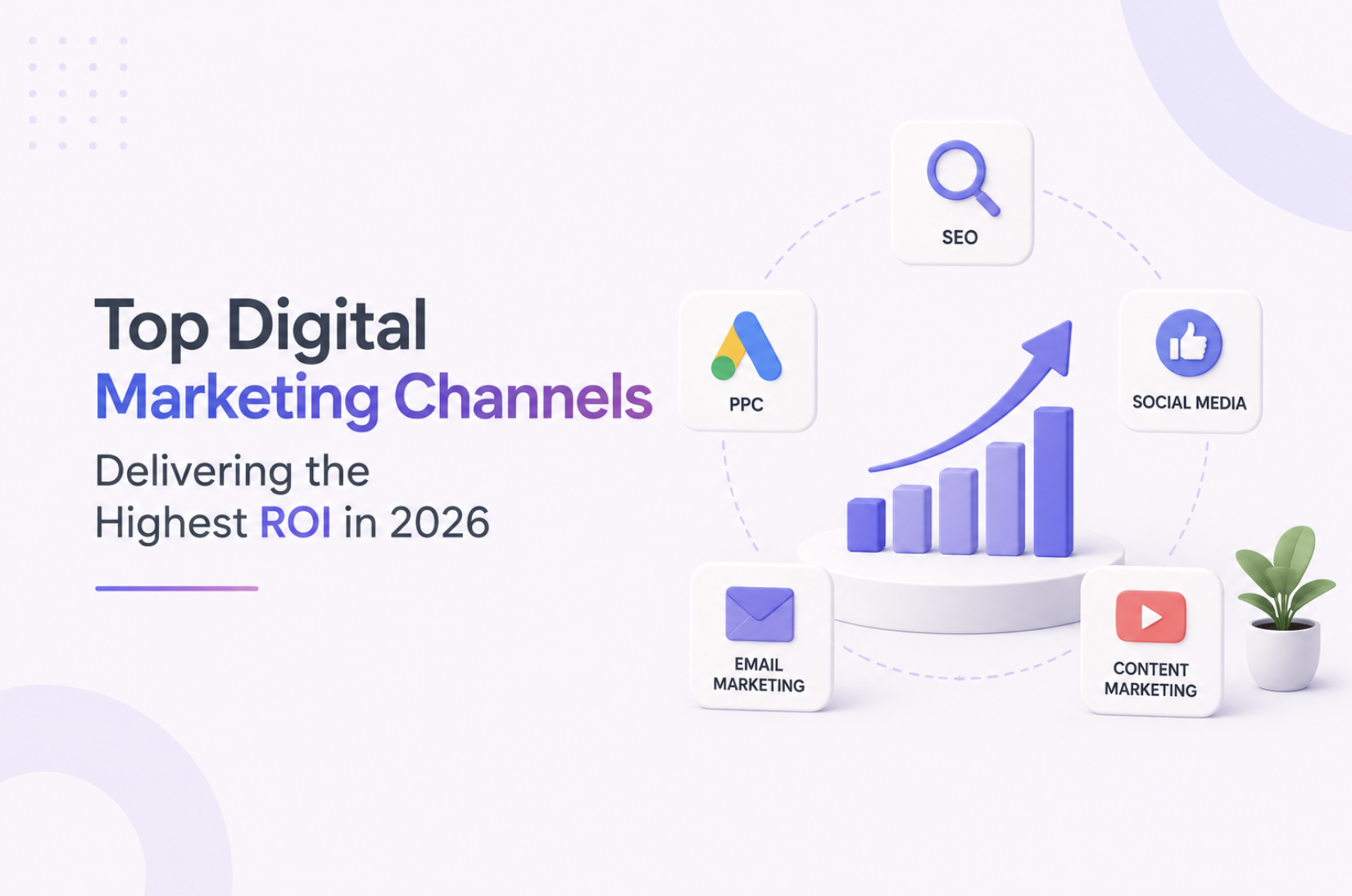

Top Digital Marketing Channels Delivering the Highest ROI in 2026

Published on :
July 20, 2026

Table of Content

Every business wants the same thing from its marketing.

Spend less. Get better results.

But with so many digital marketing channels available today, deciding where to invest your time and budget isn't always easy. Should you focus on SEO? Run paid ads? Build an email list? Create videos? Or try a mix of everything? The truth is, there isn't one channel that's perfect for every business.

In 2026, marketers are becoming more selective with their budgets. Instead of trying every platform, they're focusing on channels that consistently bring qualified leads, stronger customer relationships, and measurable business growth. Industry reports show that email marketing, SEO, paid social, and content marketing continue to rank among the highest-performing digital channels for ROI.

In this guide, we'll explore the top digital marketing channels delivering the highest ROI in 2026 and how you can use each one to grow your business.

1. Email Marketing Still Delivers Outstanding ROI

Many people think email marketing is outdated. The numbers tell a different story.

Even with the rise of social media and AI-powered platforms, email remains one of the most effective ways to connect with customers. Unlike social media, where algorithms decide who sees your content, email gives you direct access to people who have already shown interest in your business.

Think about it. Someone subscribes to your newsletter because they want to hear from you. That makes them much more likely to open your emails, visit your website, or make a purchase than someone seeing your brand for the first time.

Email marketing works well throughout the customer journey. You can welcome new subscribers, share educational content, announce new products, recover abandoned carts, or send exclusive offers to loyal customers. Each email builds another touchpoint with your audience.

The biggest reason email delivers such a high ROI is that it combines low costs with strong personalization. Modern email platforms allow businesses to segment their audience and send relevant messages based on customer behaviour instead of sending the same email to everyone. Recent industry benchmarks continue to place email among the highest ROI marketing channels, with many businesses reporting returns of around $36 to $42 for every dollar invested.

2. SEO Builds Long-Term Business Growth

If paid advertising is like renting a house, SEO is like owning one. Paid ads stop bringing visitors as soon as your budget runs out. SEO continues working long after your content is published.

When people search for answers on Google, they're usually looking for something specific. They might want to compare products, learn about a service, or solve a problem. If your website appears in those search results, you're reaching people who already have buying intent.

That's what makes organic search such a valuable marketing channel.

Instead of interrupting people with advertisements, you're helping them find exactly what they're looking for.

Of course, SEO doesn't deliver overnight success.

It takes time to build authority, publish quality content, and earn trust from search engines.

But once your pages start ranking, they can generate traffic and leads for months or even years.

Businesses investing in SEO should focus on:

  • Publishing helpful content.
  • Solving real customer problems.
  • Improving website speed.
  • Optimising pages for search intent.
  • Building topical authority.

In 2026, SEO is no longer about stuffing keywords into blog posts. It's about becoming the most helpful answer to a customer's question. Reports from marketers continue to rank websites and SEO among the strongest long-term ROI channels, especially for B2B businesses.

4. Content Marketing Builds Trust Before the Sale

People rarely buy from brands they don't trust. That's why content marketing continues to deliver excellent ROI.

Helpful content answers questions before customers even contact your business. Think about the last time you searched for something online. You probably read a blog. Watched a YouTube video. Compared products. Or downloaded a guide. That content helped you make a decision. The same applies to your customers.

Blogs, guides, videos, case studies, and infographics all help people understand your products or services without feeling like they're being sold to.

Good content keeps working long after it's published. A blog written today could continue bringing visitors for years if it answers a question people are searching for.

The most successful content marketers focus on helping first and selling later.

That's what builds trust.

And trust often leads to conversions.

5. Social Media Ads Reach Highly Targeted Audiences

Organic social media is still valuable.

But when businesses want faster growth, social media ads often become the better choice.

Platforms like Facebook, Instagram, LinkedIn, TikTok, and Pinterest offer incredibly detailed audience targeting.

You can show ads based on:

  • Age
  • Location
  • Interests
  • Online behaviour
  • Previous purchases
  • Job title
  • Industry

This level of targeting helps businesses spend their budget more efficiently because they're reaching people who are more likely to be interested.

Social media ads also work well alongside other marketing channels.

For example, someone may first discover your business through a blog, then later see your ad on Instagram before finally making a purchase.

This combination creates multiple touchpoints that strengthen brand recognition and improve conversions.

6. Video Marketing Continues to Drive Strong Engagement

If there's one type of content that continues to grow every year, it's video. People enjoy watching a quick product demonstration, a customer success story, or a short tutorial much more than reading long blocks of text. That's why video marketing has become one of the highest-performing digital marketing channels in 2026.

Videos help businesses explain complex ideas in a simple way. A two-minute video can often communicate more than a long article because people can see the product, hear the message, and connect with the brand at the same time.

You don't need expensive equipment to get started either.

Many successful brands create videos using nothing more than a smartphone, good lighting, and a clear message.

Some of the most effective video formats include:

  • Product demonstrations
  • How-to videos
  • Customer testimonials
  • Behind-the-scenes content
  • Frequently asked questions
  • Brand stories

The goal isn't to create a viral video every time. The goal is to create videos that educate, entertain, or solve a problem for your audience.

7. Affiliate Marketing Helps You Grow Through Partnerships

Another channel delivering excellent ROI is affiliate marketing. Instead of promoting your products on your own, you partner with creators, publishers, bloggers, or industry experts who recommend your products to their audience. When someone makes a purchase through their referral link, the affiliate earns a commission. It's a simple idea.

Businesses only pay when they get results. That's one of the biggest reasons affiliate marketing continues to grow.

Imagine you sell fitness equipment. Rather than relying only on your own marketing, you partner with fitness bloggers, YouTubers, or trainers who already have an audience interested in health and fitness. Their recommendation feels more authentic than a traditional advertisement because it's coming from someone their audience already trusts.

For many businesses, affiliate marketing becomes a cost-effective way to expand their reach without increasing advertising costs.

8. Why Omnichannel Marketing Delivers Better ROI

Customers don't usually buy after seeing your brand only once. They might first discover you through Google. Later they see your Instagram post. A few days later they receive your email.

Then they watch one of your YouTube videos before finally making a purchase. This is why omnichannel marketing has become so important. Instead of treating every marketing channel separately, omnichannel marketing connects them into one consistent customer experience.

For example:

Someone reads your blog. They later see a remarketing ad. They join your email list.

They receive useful content. Eventually, they become a customer. Every channel supports the next one. This creates a smoother customer journey and increases the chances of conversion because people become familiar with your brand over time.

The businesses seeing the highest ROI today aren't relying on a single marketing channel.

They're combining several channels that work together.

How to Choose the Right Digital Marketing Channel

One of the biggest mistakes businesses make is copying what other companies are doing. Just because a strategy works for someone else doesn't mean it'll work for you.

Instead, ask yourself a few simple questions.

Who is your audience?

If you're selling software to businesses, LinkedIn and SEO may perform better than TikTok. If you're running an online fashion store, Instagram and video marketing may become stronger choices.

Know where your audience spends their time.

What is your budget?

Some channels, like SEO and content marketing, require patience but deliver long-term value. Others, like paid advertising, can generate results quickly but require ongoing investment.

Choose a mix that fits both your goals and your budget.

What are your business goals?

Different goals require different strategies.

If you want immediate leads, paid advertising may be the right choice. If you're focused on long-term growth, SEO and content marketing should be priorities. If you want stronger customer relationships, email marketing deserves your attention. The best strategy isn't choosing one channel.

It's choosing the right combination.

Common Mistakes Businesses Should Avoid

Even strong marketing channels can underperform when they're used incorrectly.

Here are a few common mistakes.

Trying to Be Everywhere

  • You don't need to be active on every platform.
  • Focus on the channels where your audience already spends time.
  • Doing a few things well is better than doing everything poorly.

Ignoring Performance Data

  • Marketing decisions should be based on results, not assumptions.
  • Regularly review your analytics to understand which channels are generating traffic, leads, and sales.
  • If something isn't working, adjust your strategy instead of continuing to invest in it.

Creating Different Brand Experiences

  • Your website, advertisements, emails, and social media should all reflect the same brand voice and message.
  • Consistency builds trust.
  • When every touchpoint feels connected, customers are more likely to remember your business.

Expecting Instant Results From Every Channel

  • Some channels produce quick wins.
  • Others take time.
  • SEO and content marketing often require months before showing significant growth.
  • The businesses that stay consistent usually see the best long-term returns.

Conclusion

There isn't a single digital marketing channel that guarantees success.

The highest ROI comes from choosing the channels that match your audience, your goals, and your budget.

Email marketing continues to deliver excellent returns through direct communication. SEO builds long-term visibility. Paid advertising creates immediate opportunities. Content marketing earns trust, while video marketing, affiliate marketing, and social media advertising help businesses expand their reach. When these channels work together through an omnichannel marketing strategy, they create stronger customer experiences and better business results.

Instead of trying every new trend, focus on building a marketing strategy around the channels that consistently deliver value. Measure your results, keep improving your campaigns, and invest more in what works.

At Crescent, we help businesses identify the right digital marketing channels, create data-driven strategies, and build integrated campaigns that maximise ROI and support long-term business growth.

Frequently Asked Questions

Which digital marketing channel gives the highest ROI?

There isn't one answer for every business. However, email marketing, SEO, content marketing, and targeted paid advertising consistently rank among the highest ROI digital marketing channels because they help businesses generate qualified leads, build customer relationships, and drive long-term growth. Industry studies continue to place email marketing among the strongest performers in terms of return on investment. 

Is email marketing still effective in 2026?

Yes. Email marketing remains one of the most effective digital marketing channels because it allows businesses to communicate directly with interested customers, share personalised content, nurture leads, and encourage repeat purchases at a relatively low cost.

How important is SEO for ROI?

SEO is extremely important for long-term ROI because it helps businesses attract organic traffic without paying for every website visit. Well-optimised content can continue generating leads and sales long after it's published, making SEO one of the most sustainable digital marketing investments.

What are the best paid marketing channels?

Some of the most effective paid marketing channels include Google Ads, Meta Ads (Facebook and Instagram), LinkedIn Ads, YouTube Ads, and TikTok Ads. The best choice depends on your target audience, campaign objectives, and industry.

How do you choose the right digital marketing channel?

Start by understanding your audience, defining your business goals, and evaluating your budget. Then choose the channels that best support those goals. Most successful businesses don't rely on a single platform. They combine SEO, email marketing, content marketing, paid advertising, and social media to create a balanced strategy that delivers consistent results.

Share the blog

paper-effect

Check other blogs

pre-arrow
next-arrow
paper-effect