
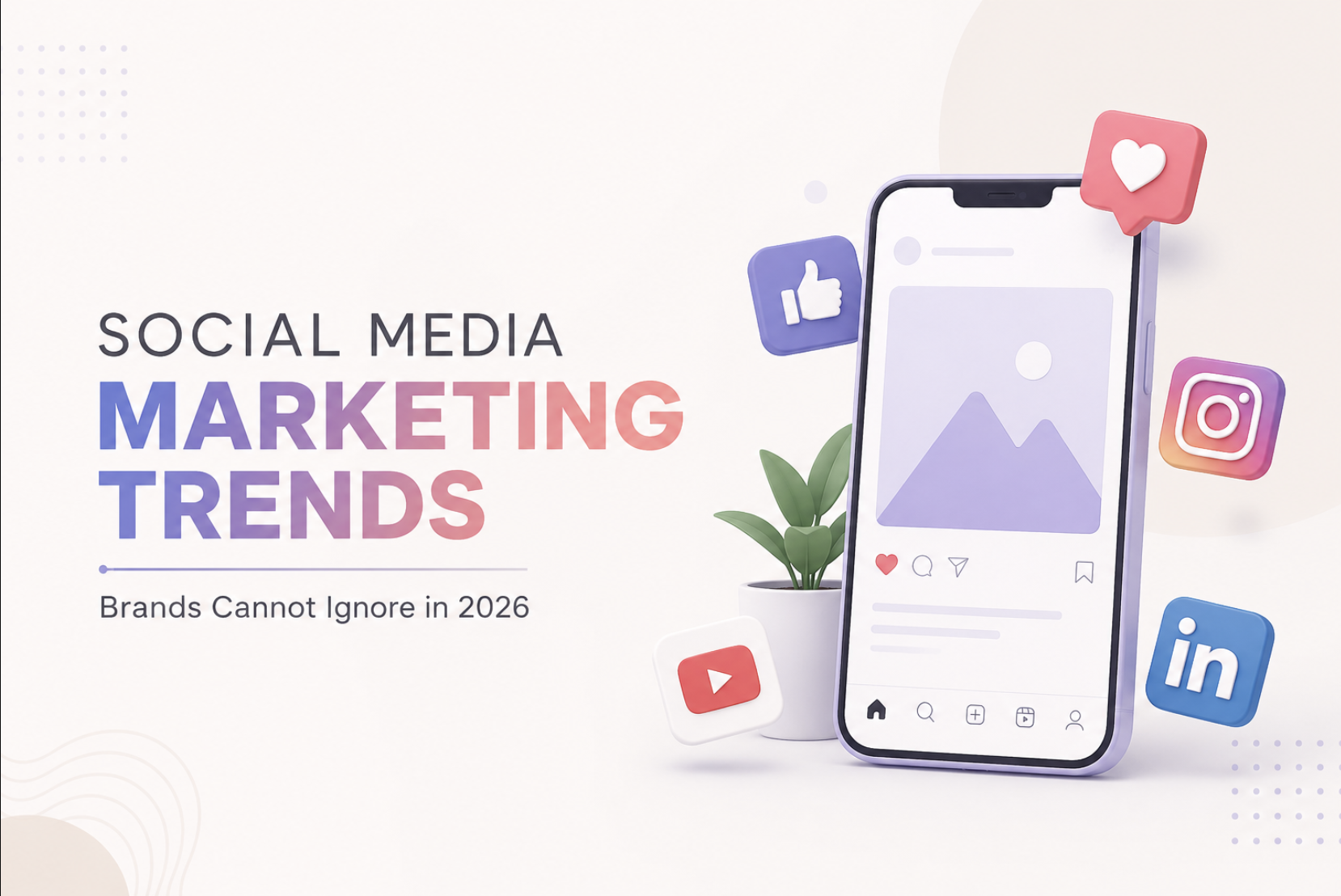

Social Media Marketing Trends Brands Cannot Ignore in 2026

Published on :
July 20, 2026

Table of Content

Social media changes fast. One month, a content idea is everywhere. The next month, nobody talks about it. That is why brands that keep learning are the ones people remember.

Think about it. A few years ago, simple image posts got thousands of likes. Then short videos took over. Today, people shop while scrolling, ask questions to AI, and even discover brands without opening Google.

This means one thing. If your business is still following an old social media strategy, you're already behind. The good news is that you don't have to jump on every new trend. You just need to understand which ones actually matter and how they can help your business grow.

In this blog, we'll look at the biggest social media marketing trends shaping 2026 and how brands can use them to stay ahead of the competition. These are not just predictions. They are already changing the way people discover, trust, and buy from brands.

1. AI Is Becoming a Smart Assistant, Not a Replacement

Let's clear up one thing. AI is not here to replace marketers. It is here to help them work faster and smarter.

Many businesses now use AI to write first drafts, suggest captions, generate content ideas, edit videos, and even study audience behaviour. This saves time and lets marketing teams focus on what AI still cannot do well, which is building real emotions and telling authentic stories.

For example, imagine you own a skincare brand.

Instead of spending hours writing ten different Instagram captions, AI can give you a starting point in minutes. Your team can then edit the copy, add personality, and make it sound like your brand.

That is the real power of AI. Brands that only depend on AI often sound robotic. Brands that mix AI with human creativity stand out because their content still feels genuine. Industry reports also show consumers expect transparency and authenticity, even as AI becomes more common in content creation.

What businesses should do?

  • Use AI for research and planning.
  • Let humans review every piece of content.
  • Keep your brand voice consistent.
  • Focus on storytelling instead of simply producing more content.

People connect with people, not machines.

2. Short Videos Still Rule Social Media

If you think short videos are just another trend, think again.

Open Instagram.

Open YouTube.

Open Facebook.

Open LinkedIn.

Almost every platform is giving more space to short videos because people love watching quick, useful, and entertaining content. Reports continue to highlight short-form video as one of the strongest-performing formats for engagement.

The best part? Your videos don't need expensive cameras. Many successful brands create videos using just a smartphone. These often perform better than highly polished advertisements because they feel real.

Here's a simple example

Imagine you sell furniture. Instead of posting only product photos, create a 20-second Reel showing how a small living room looks before and after adding your furniture.

People instantly understand the value. That's the kind of content people share.

Tips for better short videos

  • Grab attention in the first three seconds.
  • Keep videos between 15 and 45 seconds whenever possible.
  • Add captions because many people watch without sound.
  • End with a simple call to action.

Don't try to make every video viral.

Try to make every video useful.

4. The Creator Economy Is Growing Faster Than Ever

Not every influencer has millions of followers. And honestly, that's perfectly fine. Many brands are now choosing creators with smaller but highly engaged communities. Why?

Because trust matters more than follower count. Someone with 15,000 loyal followers who genuinely listens to their recommendations can often deliver better results than someone with a million followers who rarely interacts with their audience.

This shift is one of the biggest changes in the creator economy. Creators are no longer just promoting products.

Many are helping brands develop campaigns, create better content, and even shape product ideas. Industry experts note that creator partnerships are becoming deeper and more strategic rather than one-off promotions.

Choosing the right creator

Instead of asking:

"How many followers do they have?"

Ask:

  • Does their audience match my customers?
  • Do people trust their opinions?
  • Does their content feel authentic?
  • Would they naturally use my product?

These questions will usually lead to better partnerships.

5. Community Building Is More Valuable Than Chasing Followers

For years, brands celebrated one number.

Followers.

But here's something interesting. A page with 20,000 active followers can often outperform another page with 500,000 inactive ones. That's because social media rewards conversations. Not silent audiences. People want brands that reply to comments. They appreciate businesses that answer messages.

They enjoy brands that ask questions instead of constantly trying to sell something.

Community building is becoming one of the strongest long-term strategies for social media success because loyal customers often become your biggest promoters. Recent trend reports also point to stronger communities and more meaningful interactions as a priority for brands.

Simple ways to build a stronger community

  • Reply to comments.
  • Share customer stories.
  • Ask questions in your captions.
  • Run polls and quizzes.
  • Celebrate customer milestones.
  • Feature user-generated content.

When people feel noticed, they keep coming back.

And that's much more valuable than gaining thousands of followers who never engage.

6. Social Analytics Is Helping Brands Make Better Decisions

Imagine driving a car with your eyes closed. Sounds risky, right? That's exactly what marketing feels like when you don't look at your data. Many businesses still judge success by likes and follower count. But those numbers only tell part of the story.

What really matters is understanding what your audience enjoys, when they are active, which posts lead to website visits, and what content helps you get sales or enquiries.

This is where social analytics becomes valuable.

It helps you answer questions like:

  • Which type of post gets the most engagement?
  • What time should you post?
  • Which platform brings the most traffic?
  • Which campaign generated actual leads?

Instead of guessing, you make decisions based on real numbers. For example, if your educational videos consistently receive more shares than promotional posts, that's a clear sign your audience wants to learn before they buy.

Small insights like these can completely change your content strategy.

What you should track regularly

  • Engagement rate
  • Reach and impressions
  • Website clicks
  • Video watch time
  • Leads and conversions
  • Audience demographics

The brands that grow the fastest are not always the ones posting the most.

They're the ones learning from every post and improving with every campaign. Analytics is becoming an essential part of social media planning because businesses want measurable results, not just visibility.

7. AI Influencers Are Growing, But Trust Still Wins

One of the newest topics in social media is AI influencers. These are computer-generated personalities that look and behave like real creators. Some brands are already using them for product promotions, fashion campaigns, and advertisements.

It sounds exciting. But there is another side to the story. People still trust real experiences more than perfect-looking content. If brands use AI influencers without being transparent, they risk losing customer trust. Recent discussions around AI-generated influencers have highlighted the importance of being open about how AI is used in marketing.

The lesson is simple. Technology can grab attention. Authenticity keeps it.

If your brand decides to experiment with AI influencers, make sure your audience knows what they're seeing. Honesty builds stronger relationships than trying to hide the technology behind the content.

Which Social Media Platform Gives the Best ROI?

This is one of the most common questions businesses ask. The answer is simple. There isn't one platform that works best for everyone. It depends on your audience and your goals.

Here's a quick guide.

Instagram

Great for lifestyle brands, fashion, food, beauty, fitness, and local businesses. Reels, Stories, and shopping features make it a strong platform for both engagement and sales.

LinkedIn

Perfect for B2B companies, professional services, technology businesses, and corporate branding. It works especially well for generating quality leads.

Facebook

Still valuable for local businesses, communities, and paid advertising. It also offers strong targeting options.

YouTube

A great choice if you create educational content, product demonstrations, or long-form videos. One well-made video can continue bringing traffic for years.

TikTok

Excellent for brands targeting younger audiences with creative and entertaining content. Instead of asking which platform is the best, ask this:

Where does my audience spend their time?

That answer will usually lead you to the right platform.

Conclusion

Social media will keep changing. New features will launch, algorithms will evolve, and trends will come and go. But one thing will always stay the same. People connect with brands that create value, build trust, and understand their audience.

You don't need to be on every platform or follow every trend. Instead, focus on creating content that solves problems, starts conversations, and gives people a reason to come back. Whether it's using AI wisely, creating engaging short videos, partnering with the right creators, or building a loyal community, every step should bring you closer to your customers. The brands that succeed in 2026 won't be the ones chasing every viral moment. They'll be the ones that stay consistent, adapt to change, and put their audience first.

At Crescent, we help brands turn these trends into real marketing strategies that drive engagement, build stronger customer relationships, and deliver measurable business growth.

Frequently Asked Questions

What are the top social media marketing trends in 2026?

Some of the biggest social media marketing trends in 2026 include AI-powered content creation, short-form video, social commerce, creator partnerships, community building, social analytics, content automation, and AI influencers. These trends help brands connect with customers in more meaningful and measurable ways.

How is AI changing social media marketing?

AI is helping businesses generate content ideas, automate repetitive tasks, analyse audience behaviour, schedule posts, and improve campaign performance. However, successful brands still rely on human creativity to build trust and tell authentic stories.

Is influencer marketing still effective in 2026?

Yes. Influencer marketing continues to deliver strong results, especially when brands partner with creators whose audience genuinely matches their target customers. Long-term collaborations with micro and niche creators are becoming more effective than one-time promotions.

Which social media platform gives the best ROI?

There is no single answer. Instagram performs well for visual brands, LinkedIn is ideal for B2B marketing, Facebook remains effective for local businesses and advertising, YouTube offers long-term visibility, and TikTok helps brands reach younger audiences. The best platform depends on your audience and business goals.

How important is short-form video content?

Short-form videos remain one of the most effective content formats in 2026. They capture attention quickly, encourage engagement, and are heavily promoted by most social media platforms, making them an essential part of any modern content strategy.

Share the blog

paper-effect

Check other blogs

pre-arrow
next-arrow
paper-effect